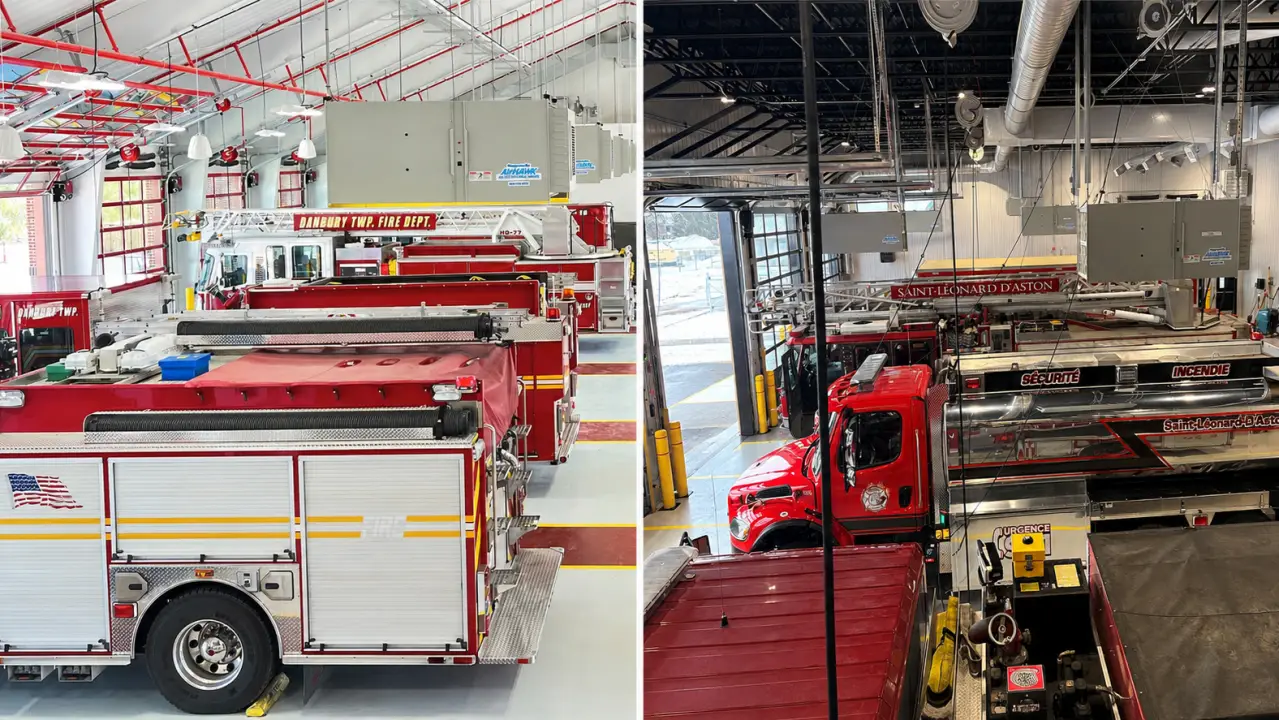
General dilution ventilation is not a compliant or reliable method for controlling vehicle exhaust in enclosed service environments. Its fundamental limitation is that it treats contamination after it has already dispersed into the occupied zone, rather than controlling emissions at the source.
Internal combustion engines operating under idle and regeneration conditions can emit exhaust streams approaching 500–600°F, containing carbon monoxide (CO), nitrogen dioxide (NO₂), volatile organic compounds such as benzene and formaldehyde, and ultrafine particulate matter . These buoyant thermal plumes rise rapidly, stratify, and spread through the breathing zone, particularly in high-bay facilities with intermittent door cycling and inconsistent air change effectiveness.
Open doors, destratification fans, and general HVAC systems provide bulk air movement and temperature regulation, but they do not establish capture velocity at the tailpipe or maintain localized negative pressure at the emission source. As a result, contaminant migration occurs faster than dilution can stabilize concentrations.
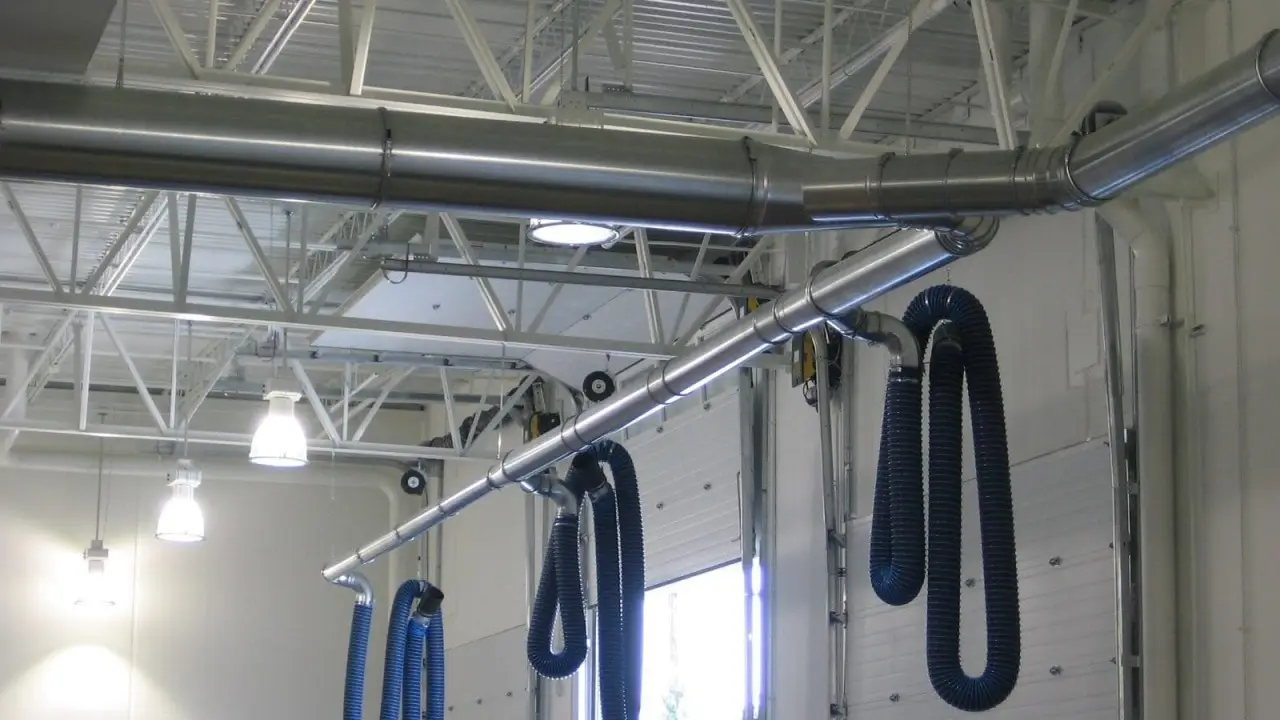
Engineered source-capture systems address this directly by capturing exhaust at the tailpipe before dispersion. These systems are designed around defined capture velocity, system static pressure, and duty-cycle-based airflow calculations, ensuring contaminants are fully contained and ducted outdoors.
A properly engineered system includes: Tailpipe capture devices designed for low leakage and minimal backpressure
CFM sizing based on vehicle class, fleet mix, and simultaneous operation
Ductwork engineered using static pressure and equivalent length calculations
Fan selection based on total system resistance, not free-air performance
Makeup air integration to maintain building pressure balance
At Windfields Mechanical Group Inc. exhaust extraction systems are delivered as fully engineered assemblies rather than standalone products. Each design is based on application-specific airflow modelling and static pressure analysis to ensure consistent performance across varying operational conditions.
This distinction is critical: dilution attempts to manage exhaust after release, while engineered source capture controls it at the point of generation.